
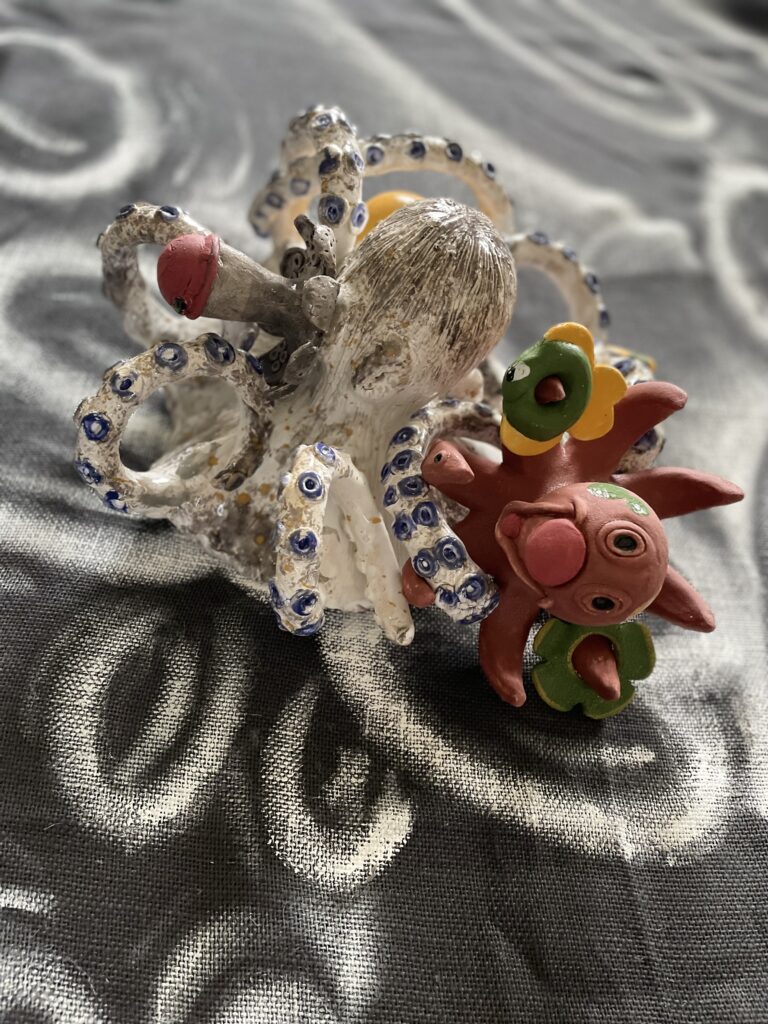
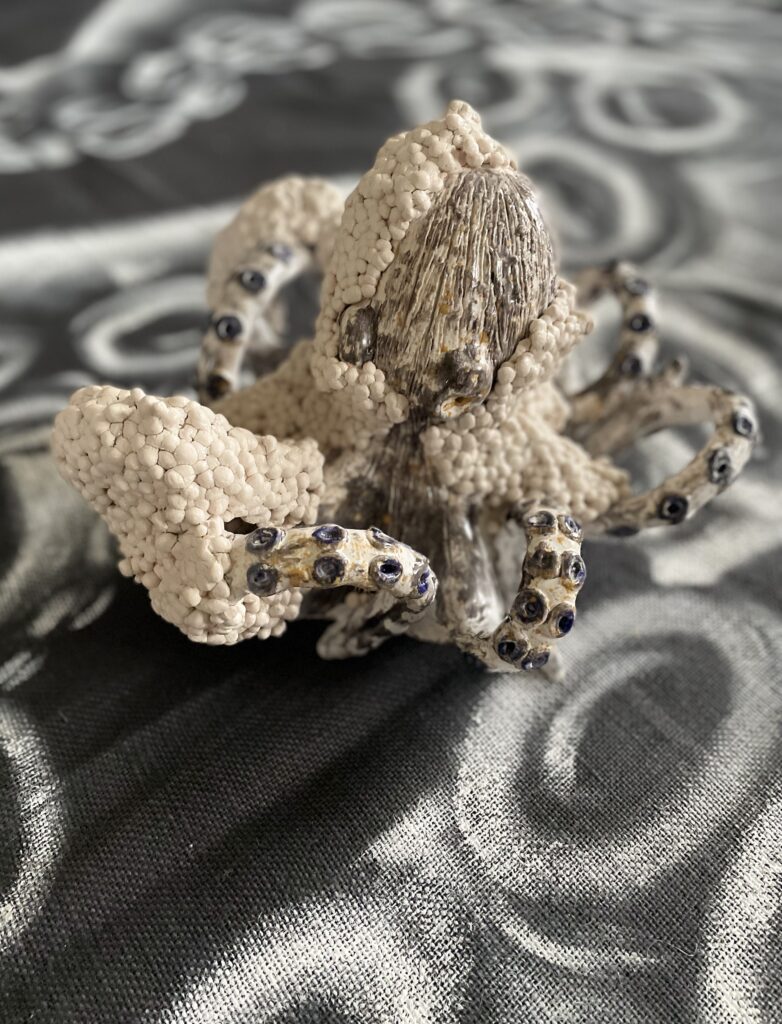
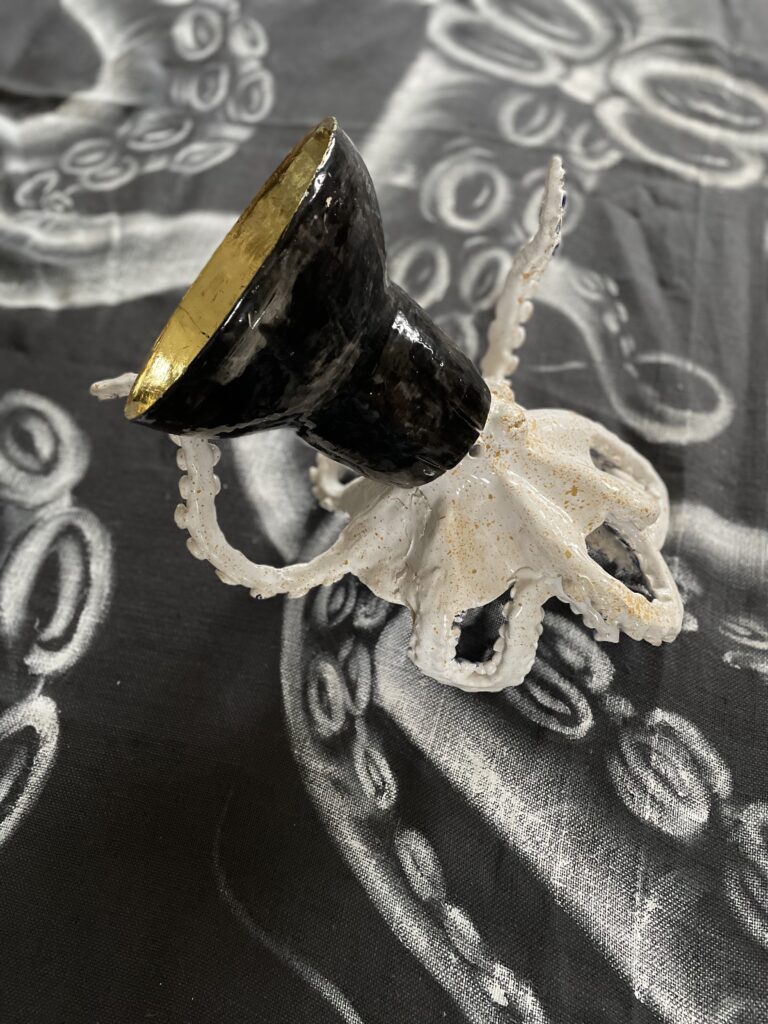
The immersive and poetic exhibition, Mer en feu, imagined by self-taught ceramic artist Vincent Leret, accompanied by author-illustrator Fred L, questions our relationship with the oceans and plastic pollution, blending childhood memories, literary myths and ecological commitment.
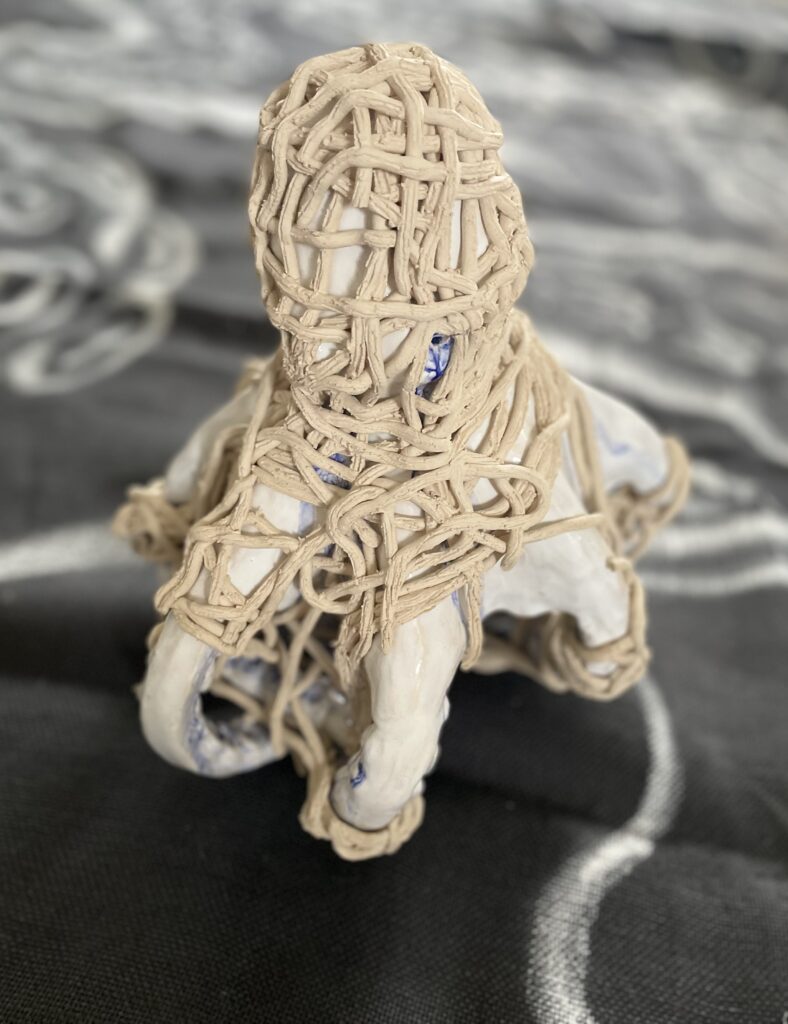
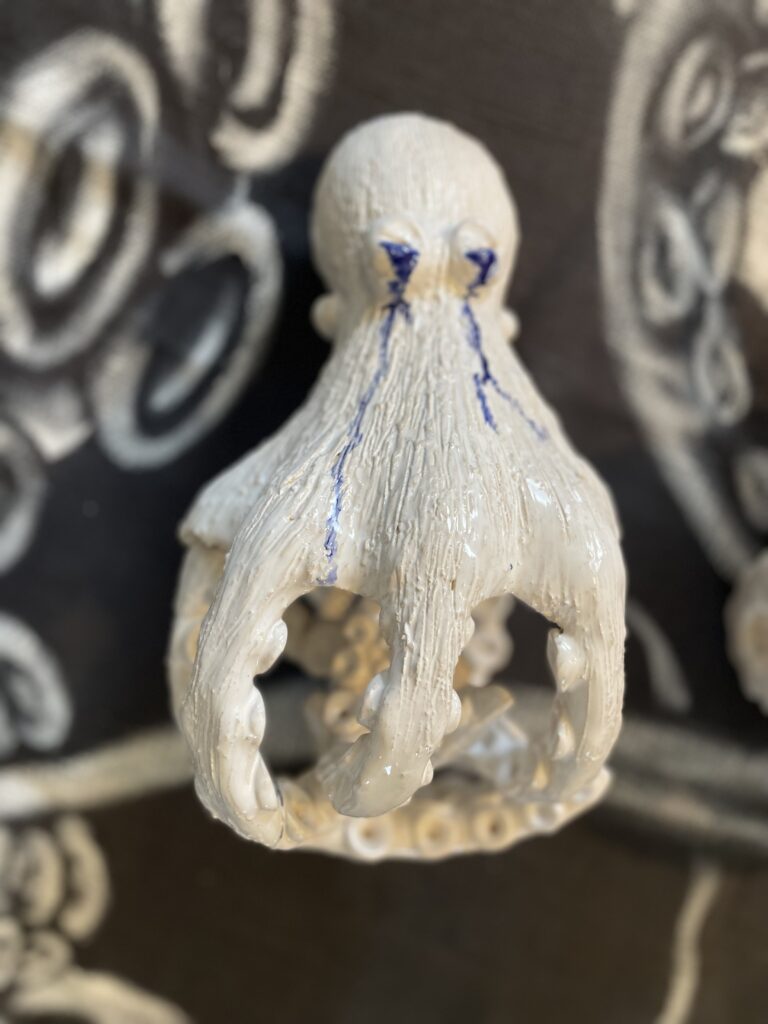
Vincent Leret's frozen, fragile and silent sculptures - octopuses with blue suction cups, childlike fish, gold-leafed waste - are part of the tour of the Paris Aquarium, as a counterpoint to the colorful, moving marine life.
Echoing this, Fred L. signs the monumental frescoes and animated projections that accompany the ceramics.
Meeting in Vincent Leret's studio:
Discover a sensitive exhibition that plays between static and movement, at no extra charge.
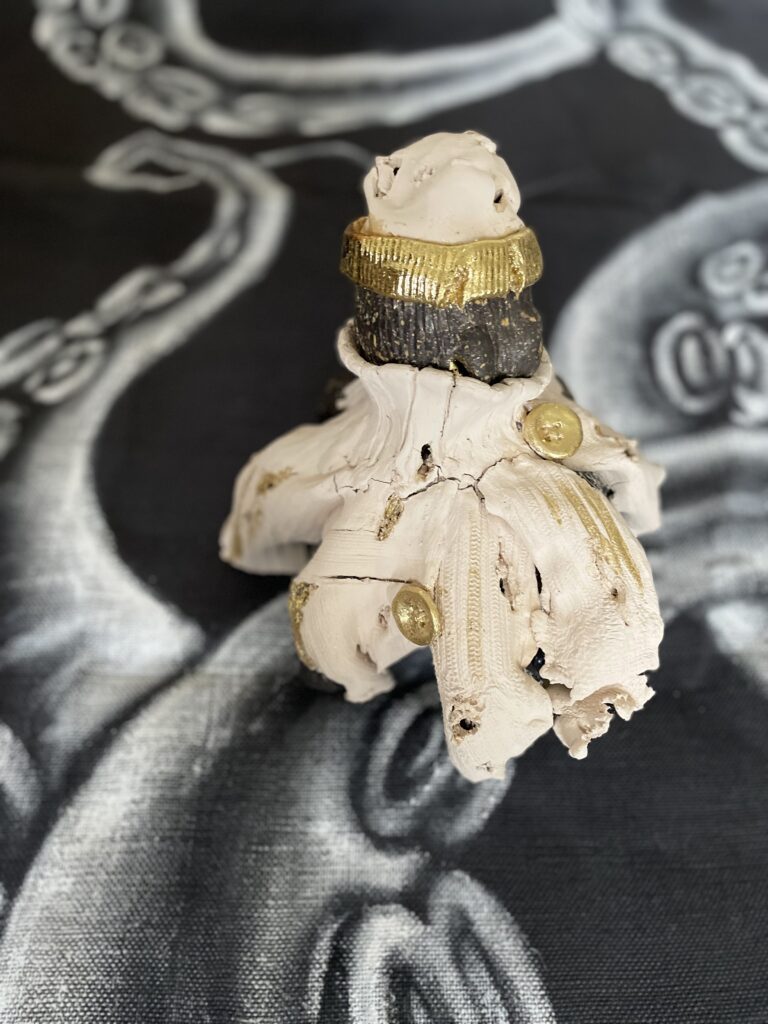
Caliste is a mischievous octopus that loves to dress up as a ghost. Damaged or lost during fishing, they sometimes exceed 500 meters in length, catching all marine species before permanently damaging the seabed.
Poulblues cries for no reason. No matter how good he feels, blue tears run down his soft white body. Climate change is having a significant impact on marine species such as octopuses, which can't survive in an overheated upper environment. Warming seas have been found to impair their vision and make them more vulnerable.
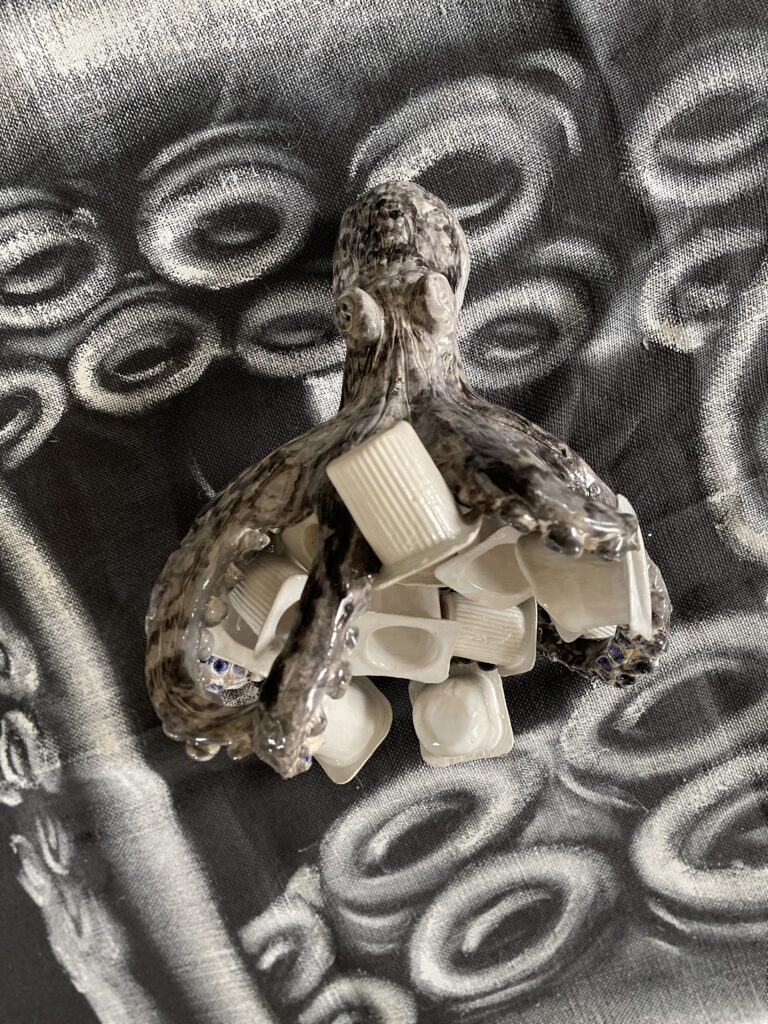
Papapoulpe awaits Mamapoulpe's return and collects yoghurt pots for all their babies' bedrooms. Almost 500 polystyrene yoghurt pots are thrown away every second in France. It's not uncommon to see this highly toxic waste colonized by cephalopods.
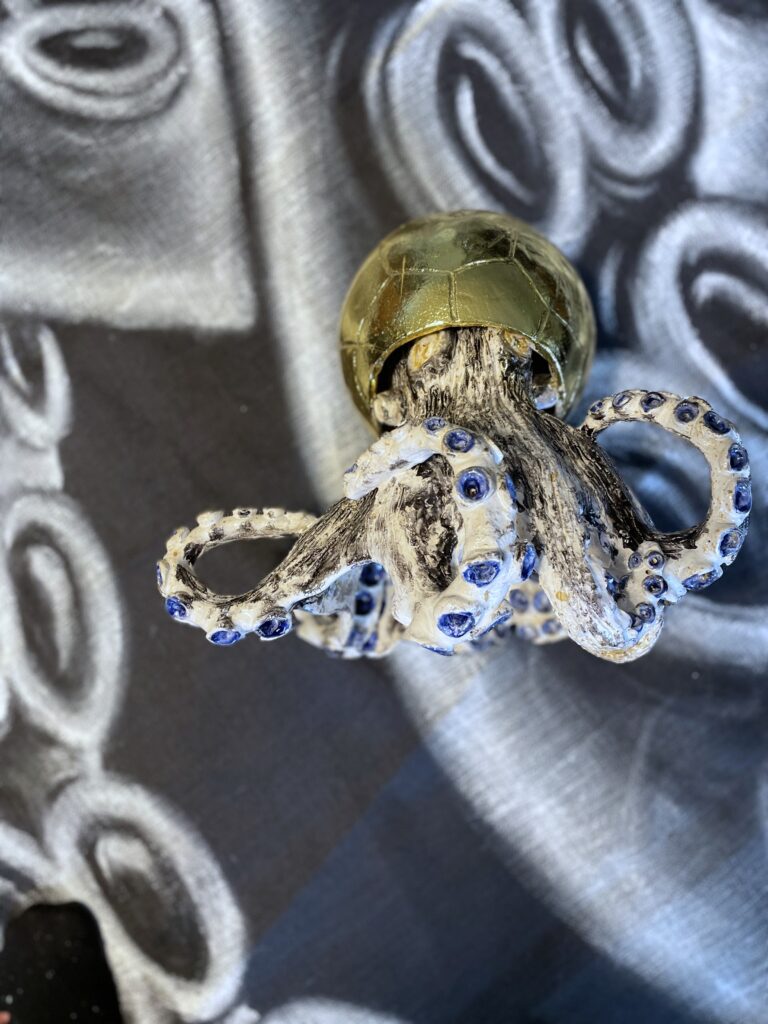
Poulbut, a former golden ball winner, has turned to politics. Poulbut evokes the "piovra", the nickname given to the mafia that extends its power into the world of sport. Soccer trophies, usually made of gold, illustrate this mentality, where the stakes of power and money never cease to harm the environment.
The Poulpool family loves antiques and collects billiard balls, the first plastic objects invented in 1868 in the USA to replace ivory. In an indirect attempt to save elephants, the billiard industry is unaware that its invention inaugurates the beginnings of plastic pollution.
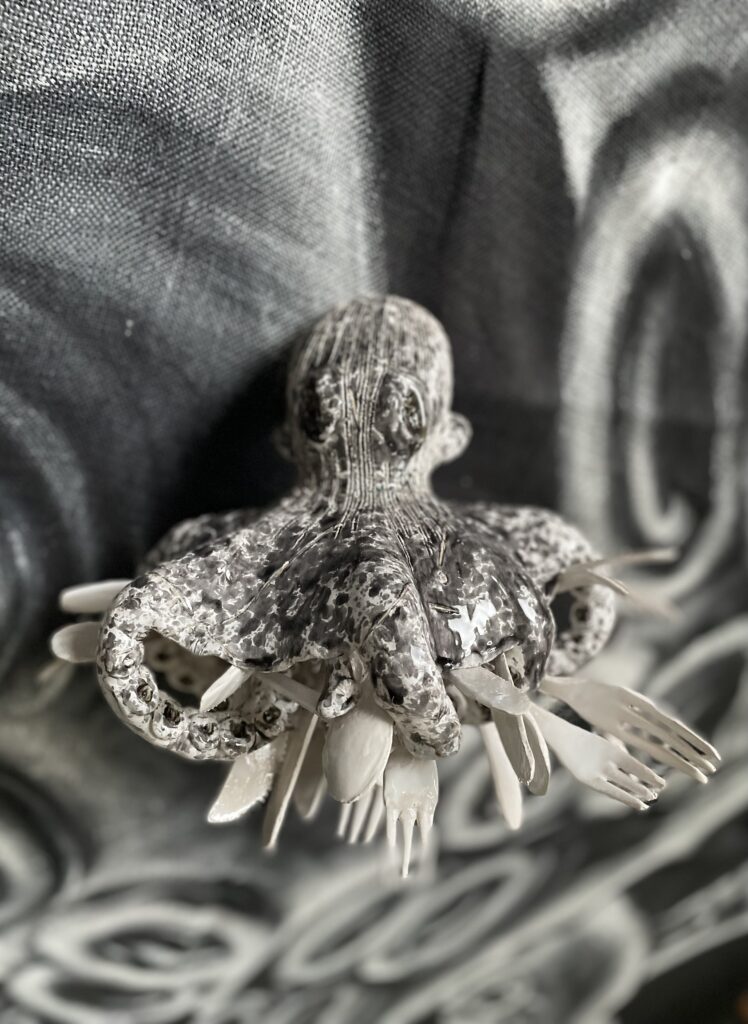
Papapoulpe has to welcome his babies and prepares the welcome meal by collecting plastic knives, spoons and forks. The amount of single-use plastic waste has never stopped growing, despite the ban since 2021. Plastic production is expected to double by 2040, tripling the amount dumped into the ocean.
Poulpobo lives on the African coast, where used clothing covers the shoreline. Ghana has become the textile dustbin of the West, collecting some 15 million items of more or less used clothing every week, a direct consequence of fast-fashion.
Poulchite is an incorrigible dreamer who often forgets his children's birthdays. Marine life continues to inspire plastic toys and objects. Victims of "natural recovery", animals become practical or playful objects (board games, teething toys, clothes dryers...), only to find themselves abandoned in their own environment.
The Daily Octopus has just announced a shower of mermaid tears. Early in the morning, Poulpot discovers a huge mantle of tears. Mermaid tears used to refer to small stones. Today, they are the raw granules used by plastics manufacturers to produce all plastic objects. Over 200,000 tonnes of granules are released into the environment every year.
Poulpulaire is invited to his sister's wedding in the Bay of Mont-Saint-Michel. Attentive to his image, he transforms one of the black plastic cones he finds near the mussel beds into a hat.