

Since its reopening, the aquarium has been developing an edutainment approach, as part of a "modernist" trend among museums.
The magic of the ocean becomes the magic of life at the Paris Aquarium
Beyond the beauty of the Ocean, the Paris Aquarium shows the incredible resources of living things. Life was born in the ocean, and nothing highlights the magic of life better than the incredible exuberance of marine biodiversity.
The Aquarium de Paris is a member of AFdPZ. Created in 1969, the Association Française des Parcs Zoologiques (AFdPZ) federates some one hundred zoological parks and aquariums in mainland France, overseas France and Belgium, which must comply with the guidelines of the AFdPZ code of ethics. AFdPZ's mission is to create a network of French zoological parks that are experts in wildlife, and to ensure their representativeness in dealings with supervisory authorities and international organizations. Our organization supports the commitment of zoos to animal welfare and their official missions of biodiversity conservation, public education and scientific research. AFdPZ also manages its own in situ conservation fund.
In a context where attention spans are shrinking as screens become more and more a part of children's daily lives, informal educational media are becoming essential to awakening knowledge.
At the Aquarium de Paris, without ever compromising on content, educational messages are conveyed in a playful, pedagogical way:

Live shows: theater, song, dance, a real mermaid in a pool...

Scientific mediators offer twenty-minute presentations on sharks, jellyfish, feeding... They are also on hand throughout the tour to answer visitors' questions.

Temporary exhibitions in collaboration with brands and characters known to children, with the aim of raising awareness of marine issues in a fun and accessible way.
The mission of the Aquarium de Paris is to connect large population groups far from the coast with the protection of the ocean. Every year, thousands of school classes, families, day-care centers, retired people and students come to learn at this institution of informal environmental education.
The Aquarium de Paris presents visitors with hundreds of species of fish, jellyfish, coral, crustaceans and other marine animals. This collection constitutes an enormous library of living things. Many of these animals are endangered by human activities and need to be closely monitored in the wild.
It is the duty of aquariums and zoos to ensure this conservation of genes, individuals, populations and species. It is also important to continue observation efforts concerning life cycles, reproduction, feeding and resistance to certain stresses.
The Paris Aquarium presents its visitors with a large collection of coral colonies, detailing the conservation and reintroduction methods used around the world.
For several years now, the Aquarium de Paris has been committed to becoming one of the world's leading research establishments for jellyfish and, more broadly, cnidarians. This family of animals has spanned the ages since the origins of life on Earth. Some species even hold rejuvenation secrets that fascinate researchers. And the Aquarium may well be one of the laboratories helping to decipher this secret, thanks to a research grant awarded in 2023 for Tomasz Jurkowski's work on the immortal jellyfish Turritopsis nutricula, to be held at the Aquarium. The aim of this research is to study the genetic sequences involved in the jellyfish's rejuvenation process.
The Aquarium's expertise is not only recognized, but also put to practical use.
To develop its expertise, the Aquarium de Paris has renovated and enlarged its laboratory, which now boasts 92 tanks dedicated to polyps, 76 rearing tanks and 44 jellyfish grow-out tanks. The team of biologists dedicated to the Médusarium© now includes 4 specialists.
The teams at the Aquarium de Paris are among the world's leading jellyfish specialists, able to master the parameters of water salinity and temperature, tank currents, and feeding at the different stages of their development, from polyp (initial fixed stage) to adulthood. This precision work is essential, as each species has its own specific needs, which are still poorly documented in scientific literature.
The Aquarium mainly studies the polyp stage of jellyfish life. This form is common to all cnidarians (jellyfish, corals, anemones, etc.). The Aquarium's aim is to become, in the medium to long term, a major player in research into these animals.
The Paris Aquarium's expertise in cnidarians goes beyond the simple reproduction of species.

Since February 2023, the aquarium has also been hosting the research of a CIFRE doctoral student in collaboration with Delphine Bonnet, professor at the University of Montpellier. The Paris Aquarium's Médusarium© will provide the ideal environment and skills to complete the writing of 4 scientific publications that will illustrate this research.

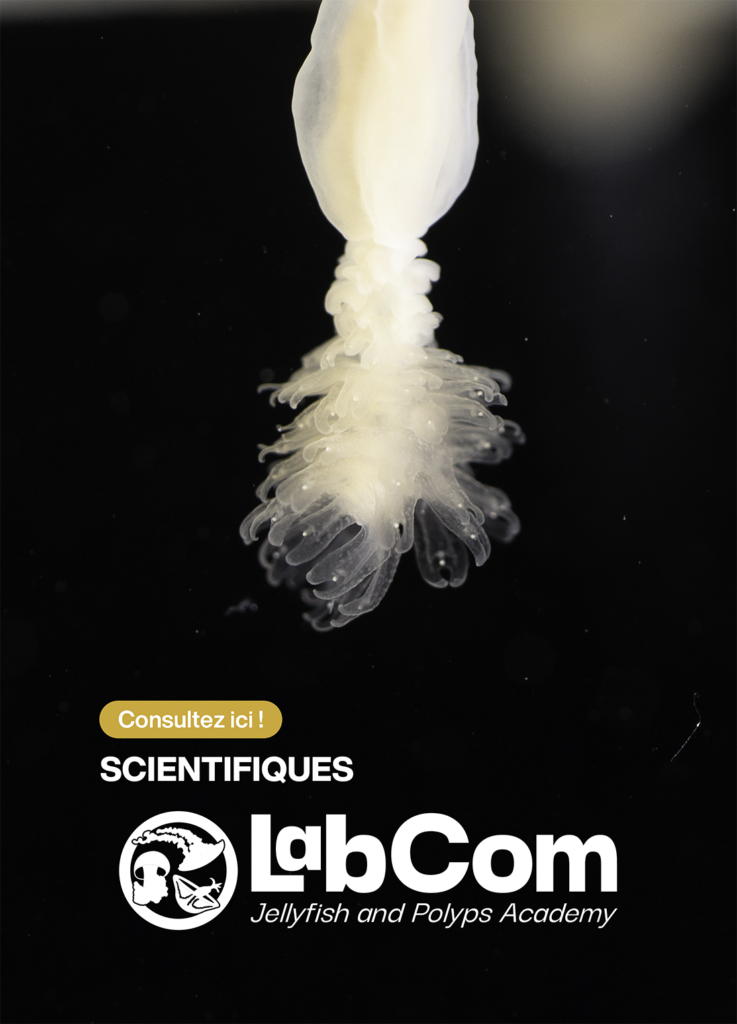
The Aquarium is also integrating a LabCom (joint laboratory) which will become the "Jellyfish Academy". The members of this network will bring together the leading professionals in aquariology on the subject of cnidarians, with the aim of exchanging knowledge and skills that were previously non-existent.
Address
Aquarium de Paris
5 avenue Albert de Mun
75016 Paris
The Aquarium de Paris is open daily from 9:30 am to 7 pm, except on July 14. Last admission is at 6pm. Open on Saturdays until 9pm. Last admission at night is 8pm.